Language
.png)
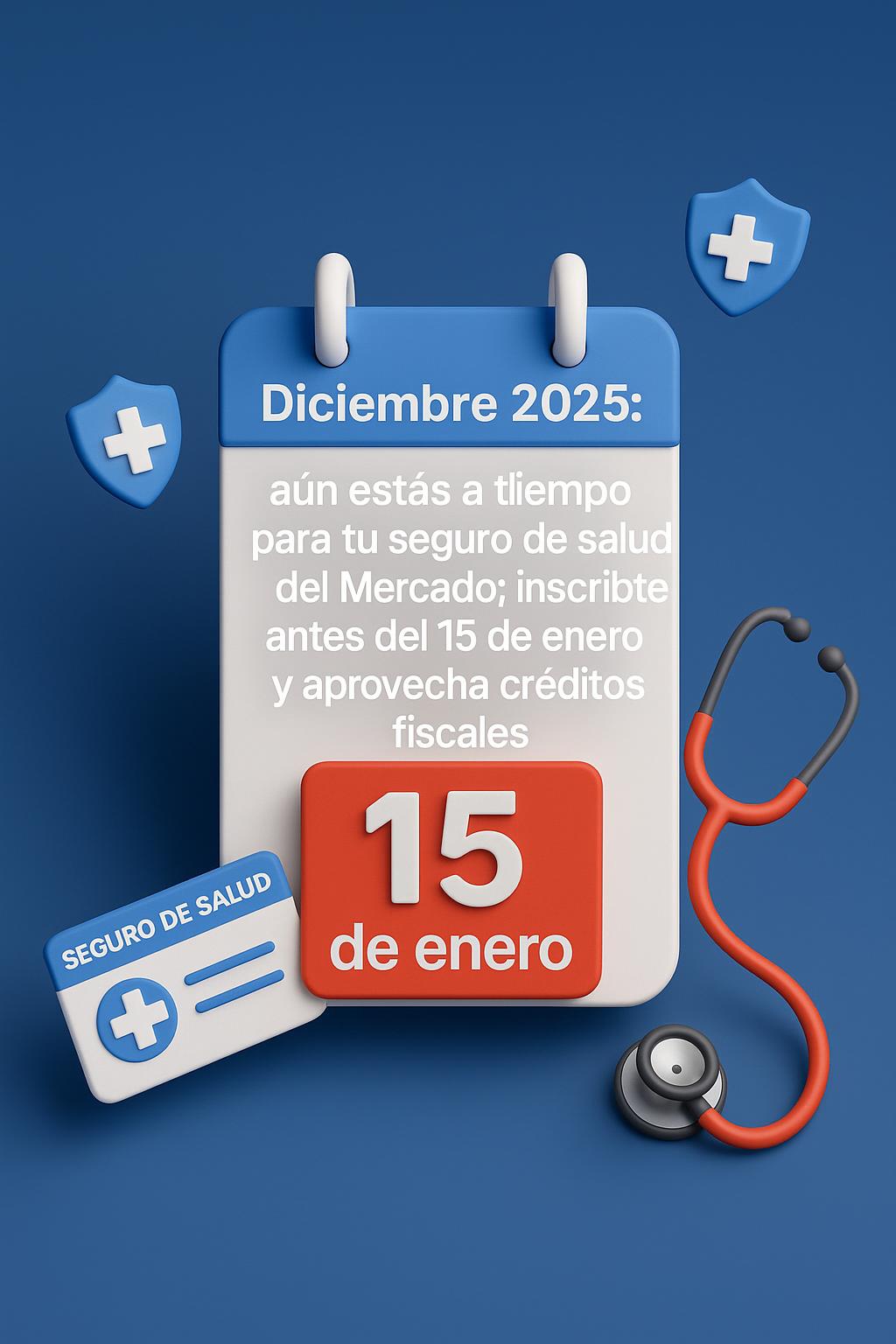
December is the key month to review or choose your Marketplace health insurance (also known as “Obamacare”) and enter the new protected year. If you sign up or make changes before December 15, in most states your coverage can start on January 1. In addition, financial aid (“subsidies”) that lower your monthly premium is a tax credit, so it directly affects your tax return. Here we explain, in simple language, how to take advantage of Open Enrollment and avoid problems with the IRS.
- Record enrollment: In 2024, 21.3 million people enrolled in Market plans, an all-time high, thanks to available financial aid. Source in References.
- Real premium savings: 4 out of 5 people were able to find a plan for $10 a month or less after getting help. Source in References.
- Impact on your taxes: If you get help paying your premium in advance (APTC: Early Premium Tax Credit), you must “reconcile” that credit when filing taxes using Form 8962. If you don't, your refund may be delayed and you could even lose help for the next year. Source in References.
- Market/Obamacare: the official platform where you compare and buy health insurance with possible subsidies.
- APTC (Advance Premium Credit): money that the government pays each month to your insurance to lower your premium. It's not “free”: when you do your taxes, you compare what they advanced you with what you actually had based on your income for the year.
- Reconcile: balance the accounts on your tax return with Form 8962. If they overgave you, you could return some of it; if they undergave you, you could receive more credit for your refund.
- Form 1095-A: summary sent to you by the Market in January with the months covered and the help received. It's key to your taxes.
1) Check if you qualify for help
- You generally qualify if you live in the U.S., don't have access to an “affordable” plan from your employer or Medicare/Medicaid and are “legally present” (authorized immigration status). If you have questions about your status or that of your family, we evaluate you in private.
2) Estimate your income for the year of coverage
- The aid is calculated with your annual household income. If you underestimate a lot, you may owe part of the credit on your taxes; if you overestimate, you could recover more when you file. We help you project income if you are an employee, contractor, business owner or receive multiple incomes.
3) Have your documents ready
- Identifications, SSN or ITIN, immigration documents if applicable, proof of income (pay stubs, 1099, account statements, accounting book if you are self-employed).
4) Review your current plan
- Physician, hospital, drug and deductible networks may change each year. Don't renew blindly. We compare total benefits and costs for you (premium + deductible + co-pays).
5) Consider life changes
- You got married, a baby was born, you changed your job or your address. These events change your eligibility and the amount of the subsidy.
6) Understand how it will affect your taxes
- Save your 1095-A for January.
- File your return with Form 8962 to reconcile the APTC.
- If you are a business owner, check if you qualify for the premium deduction as a self-employed (independent). We explain how not to “crash” the deduction with the credit.
7) Take advantage of the key date
- Sign up or change plans before December 15 to begin coverage on January 1 (in most states). Then, Open Enrollment continues until mid-January, but your start of coverage may move to February.
- Underestimate income for “fear” of losing the subsidy. Better to estimate realistic so as not to have to when presenting.
- Do not report income changes during the year. We can adjust your APTC to avoid surprises in April.
- File taxes without 1095-A or Form 8962. This delays refunds and may affect your future help.
- Renew the same plan without reviewing the doctor's network or updated deductible.
- We quote you and compare Marketplace plans based on your budget, doctors and medicines.
- We verify your eligibility for grants and enroll you in minutes.
- We guide you with 1095-A and Form 8962 through tax season to make sure everything works out.
- If you are a contractor or business owner, we coordinate your health plan with your tax and accounting strategy.
- Care in Spanish, with familiar treatment and clear solutions.
Schedule your appointment today to ensure your coverage on time and enter 2026 with your finances and taxes in order. Visit us at www.lafamiliamultiservices.com.
References
- Department of Health and Human Services (HHS). “Biden-Harris Administration announces record-breaking 21.3 million people signed up for quality, affordable health coverage through the Marketplaces” (January 24, 2024). https://www.hhs.gov/about/news/2024/01/24/biden-harris-administration-announces-record-breaking-21-3-million-people-signed-up-quality-affordable-health-coverage-through-marketplace.html
- HealthCare.gov. “Enrollment dates and deadlines” (Open Enrollment generally from November 1 to January 15; coverage from January 1 if you enroll before December 15, in most states). https://www.healthcare.gov/quick-guide/dates-and-deadlines/
- HealthCare.gov. “See plans and pricing: 4 out of 5 can find a plan for $10 or less/month with financial help.” https://www.healthcare.gov/see-plans/
- GO. “Premium Tax Credit (PTC): Information and requirements for claiming or reconciling credit.” https://www.irs.gov/credits-deductions/individuals/premium-tax-credit
Note: Exact dates may vary in some states with their own markets. The information is general in nature and does not constitute individual legal or tax advice. For a personalized analysis, schedule a consultation with our team.

.jpeg)
.jpg)





.jpg)






.jpeg)
.jpeg)
.jpeg)
.png)


.jpg)
.jpg)

.jpeg)




.jpg)





.jpg)


